“And so I urge you: go after experience rather than knowledge…Knowledge tends to breed conceit, but love builds. Knowledge is full of labor, but love, full of rest…Yet you say: ‘Rest? What can he possibly be talking about? All I feel [in meditation practice] is toil and pain, not rest.’…My answer is simple: you find this work painful because you are not yet accustomed to it. Were you accustomed to it, and did you realize its value, you would not willingly give it up for all the material joys and rest in the world…I call it rest because your spirit does rest in a freedom from doubt and anxiety about what it must do…And so persevere in it with humility and great desire, for it is a work that begins here on earth but will go on without end into eternity.”
—Privy Counsel, Chapters 23 and 24
And so ends the anonymously written 14th century masterpiece on Christian meditation, The Book of Privy Counsel. Though a mystic, the author is always completely realistic about the challenges of the contemplative life, and so even in the end he acknowledges the pain and toil that often accompanies this work. Yet he emphasizes that this difficulty is part of the process, even a grace in itself, as we let go of our habitual tendency to want to know with the mind and we begin to really know (experience) with our hearts, or souls, or very being. This kind of knowledge is complete freedom from fear, because in this ocean of being the contemplative has seen that there is only one Life, which is the Life of us all.
---------------------------------------------------------------------------------
This concludes my commentary on the Book of Privy Counsel. For those of you on my mailing list, I will e-mail a Word version of the edited commentary, along with a brief introduction, in coming days. In the introduction I'll try to give a little more historical and theological background on this seminal piece of contemplative literature. If you are not on my mailing list (basically my e-mail address book; in other words, if I don't know you personally) but would like to be included, please post a comment to this blog along with your e-mail address. I'll remove your address from the blog and then include you in the next mailing.
I feel very blessed to have been led down this path, to have received the gift of these teachings, and to have the ability to share them with you. I feel wholly inadequate to do so, but I am encouraged by those of you who have read the blog and have received some blessing from it yourselves. We have no idea what miracles we may be working in the simple words we share with each other.
I never know exactly where this journal is going, so I don't know what I'll write about next. I am interested in looking at the teachings of the Desert Fathers, the earliest Christian monastics, but some other direction may emerge. Log on tomorrow if you are so inclined and we'll see what happens. Pax.
Showing posts with label Privy Counsel. Show all posts
Showing posts with label Privy Counsel. Show all posts
Tuesday, October 11, 2005
Monday, October 10, 2005
Embracing the Dark Night
“You will learn that all I have written of these two signs and their wonderful effects is true. And yet, after you have experienced one, or perhaps all of them, a day will come when they disappear, leaving you, as it were, barren; or, as it will probably seem to you then, worse than barren. Gone will be your new fervor, but gone, too, your ability to meditate as you had long done before. What then?”
—Privy Counsel Ch. 20
This is an extremely important instruction in meditation practice, but one that is not often addressed in more basic introductions. This is what St. John of the Cross called “the dark night of soul.” Once a contemplative has made some progress on the path, and has experienced some of the pleasant side effects of meditation, suddenly the benefits seem to vanish. The practice becomes stale, boring, difficult and completely devoid of any joy.
This is when most people give up, or worse, develop an outright hostility toward spiritual practice. But according to St. John, and to the anonymous author of Privy Counsel, this is a sign of great promise. It means that the spirit is purifying the heart of all need for a result, which is the ultimate prerequisite to entering the “cloud of unknowing.”
A central quality of contemplative living is, then, a simple, quiet equanimity—the gift of accepting all things as they arise and pass away, even the unpleasant, the boring, the seemingly painful. Because as long as we wait for some circumstance to make us happy, whether internal or external, we miss the real point: that genuine happiness lies in receiving the gift of what is, just as it is.
—Privy Counsel Ch. 20
This is an extremely important instruction in meditation practice, but one that is not often addressed in more basic introductions. This is what St. John of the Cross called “the dark night of soul.” Once a contemplative has made some progress on the path, and has experienced some of the pleasant side effects of meditation, suddenly the benefits seem to vanish. The practice becomes stale, boring, difficult and completely devoid of any joy.
This is when most people give up, or worse, develop an outright hostility toward spiritual practice. But according to St. John, and to the anonymous author of Privy Counsel, this is a sign of great promise. It means that the spirit is purifying the heart of all need for a result, which is the ultimate prerequisite to entering the “cloud of unknowing.”
A central quality of contemplative living is, then, a simple, quiet equanimity—the gift of accepting all things as they arise and pass away, even the unpleasant, the boring, the seemingly painful. Because as long as we wait for some circumstance to make us happy, whether internal or external, we miss the real point: that genuine happiness lies in receiving the gift of what is, just as it is.
Friday, October 07, 2005
Two Signs
“I sense a question rising in your mind. Perhaps you are thinking something like this: ‘Tell me, please, is there one sign, or more, to help me test the meaning of this growing desire I feel for contemplative prayer?’…[There are two signs,] one interior and one exterior…The interior sign is that growing desire for contemplation constantly intruding in your daily devotions…The second sign is exterior and it manifests itself as a certain joyful enthusiasm welling up within you, whenever you hear or read about contemplation.”
—Privy Counsel, Ch. 18
All of this continues a kind of aside from the technique of contemplative meditation, but is nevertheless important since the author of Privy Counsel discusses at length the fact that this practice is not for everyone. So, who is it for? And here in Chapter 18 he answers with some signposts that might indicate one is opening to the practice.
The first is key, and I think happens to far more people than they realize. I encounter many people who say, “I just can’t pray anymore,” by which they mean, “I can’t pray with words anymore.” They usually don't realize that there are ways to pray that don't involve words, or even ideas and concepts. This dissatisfaction with traditional prayer is not in itself a sign of a budding contemplative, but in accompaniment with other variables like access to the teachings on contemplative prayer, someone to guide them in the practice, and life circumstances that present the opportunity for practice, it could be. The second sign is the response to discovering this silent way of knowing God. If it resonates with your deepest being, if it makes sense intuitively, if you feel its pull, then perhaps you are ripe for the practice.
In Chapter 19, the author goes on to describe how this all comes together. I have nothing to add by way of commentary. The author speaks for himself:
“Your whole personality will be transformed, you countenance will radiate an inner beauty…A thousand miles would you run to speak with another who you knew really felt it, and yet when you got there, find yourself speechless…Your words will be few, but so fruitful and full of fire that the little you say will hold a world of wisdom (though it may seem nonsense to those still unable to transcend the limits of reason). Your silence will be peaceful, your speech helpful and your prayer secret in the depths of your being. Your self-esteem will be natural…your way with others gentle, and your laughter merry…How dearly you will love to sit apart by yourself, knowing that others, not sharing your desire and attraction, would only hinder you…Thus the mounting desire for contemplation and the joyful enthusiasm that seizes you when you read or hear of it meet and become one.”
—Privy Counsel, Ch. 18
All of this continues a kind of aside from the technique of contemplative meditation, but is nevertheless important since the author of Privy Counsel discusses at length the fact that this practice is not for everyone. So, who is it for? And here in Chapter 18 he answers with some signposts that might indicate one is opening to the practice.
The first is key, and I think happens to far more people than they realize. I encounter many people who say, “I just can’t pray anymore,” by which they mean, “I can’t pray with words anymore.” They usually don't realize that there are ways to pray that don't involve words, or even ideas and concepts. This dissatisfaction with traditional prayer is not in itself a sign of a budding contemplative, but in accompaniment with other variables like access to the teachings on contemplative prayer, someone to guide them in the practice, and life circumstances that present the opportunity for practice, it could be. The second sign is the response to discovering this silent way of knowing God. If it resonates with your deepest being, if it makes sense intuitively, if you feel its pull, then perhaps you are ripe for the practice.
In Chapter 19, the author goes on to describe how this all comes together. I have nothing to add by way of commentary. The author speaks for himself:
“Your whole personality will be transformed, you countenance will radiate an inner beauty…A thousand miles would you run to speak with another who you knew really felt it, and yet when you got there, find yourself speechless…Your words will be few, but so fruitful and full of fire that the little you say will hold a world of wisdom (though it may seem nonsense to those still unable to transcend the limits of reason). Your silence will be peaceful, your speech helpful and your prayer secret in the depths of your being. Your self-esteem will be natural…your way with others gentle, and your laughter merry…How dearly you will love to sit apart by yourself, knowing that others, not sharing your desire and attraction, would only hinder you…Thus the mounting desire for contemplation and the joyful enthusiasm that seizes you when you read or hear of it meet and become one.”
Wednesday, October 05, 2005
The Path is the Goal
 “I make this point on purpose to refute the ignorant presumption of certain people who insist that man is the principal worker in everything, even in contemplation…But I want you to understand that in everything touching contemplation, the contrary is true. God alone is the chief worker here…In every other good work we act in partnership with God…God consents to [our activities] and assists us through secondary means: the light of Scripture, reliable counsel, and the dictates of common sense, which include the demands of one’s state, age, and circumstances of life…But in all that touches contemplation, even the loftiest human wisdom must be rejected…This, then, is the way I understand the Gospel’s words: ‘Without me you can do nothing’…Alas! I have used many words and said very little. But I wanted you to understand when to use your faculties and when not to…And since it is written, let it stand, though it is not particularly relevant to our subject.”
—Privy Counsel, Ch. 17
This chapter amounts to a lengthy aside reinforcing the mysterious message discussed in yesterday’s post: that in contemplation, we don’t actually do anything. This is difficult, and there is a risk that we take on a kind of anthropomorphic view of God, who is responsible for everything that happens, and for us to slip into a kind of dumb quietism. This is not what the author means, and is in fact a kind of heresy.
The author goes on at length emphasizing the free will of humans, and that we are co-creators with God of our everyday reality. We are “partners” with God, and we can test every decision by scripture, the advice of others we trust, and common sense, as well as taking into consideration all the many variables of our life circumstances. This kind of discursive reason is necessary for effectively functioning in the world, including the decision to take on a spiritual practice or meditation, and all the various techniques and teachings that are associated with it.
However, this is as far as our activity can go. The author advises that after that, you just sit still and let whatever happens next unfold. This is the difficult part, because we wonder why we are pursuing such a practice if we cannot influence the outcome. I think what the author is getting at here is our fundamental problem spiritually, psychologically and emotionally: our need for control, and our desire to shape an external situation (or in this case an internal situation) that will make us happy. But in fact, the root teaching is that no such situation will lead to true happiness. In the end, it is the letting go that brings liberation.
And letting go is the practice itself. As the Zen master Dogen said, “Zazen [meditation practice] is itself enlightenment!”
Tuesday, October 04, 2005
Waiting by the Door
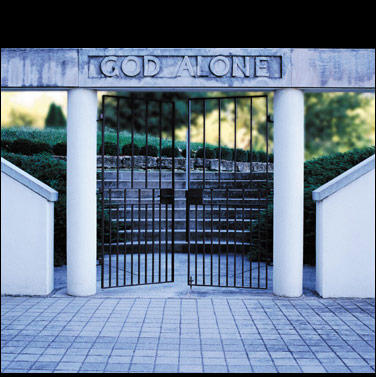 “Tell me now, if Christ is the door, what should a person do once she has found it? Should she stand there waiting and not go in? Answering in your place, I say: yes, this is exactly what she should do…she must learn to be sensitive to the Spirit guiding her secretly in the depths of her heart and wait until the Spirit stirs and beckons her within…Lay hold of [contemplation], then, if you can; or rather I should say, if grace lays hold of you…For left to ourselves, we may proudly strain after contemplation, only to stumble in the end.”
—Privy Counsel, Ch. 16 (gender-inclusive text added)
This is one of the many paradoxes that lies in the background of everything the author of Privy Counsel teaches. We do all this work, but in the end, we do nothing. The work is done to us. This is why some authors distinguish between centering prayer and contemplation. One is the technique; the other is the fruit of the technique. They are not necessarily connected. We do not earn contemplative awareness, nor do we give it to ourselves. We dispose ourselves to receive it by letting go of all results and accepting everything just as it is. Like a Zen koan, the answer does not appear until we are content with no answer at all. Therein lies the mystery.
Monday, October 03, 2005
Listening for What Comes Next
“Moreover, outside of God’s special intervention, I believe it is humanly impossible for a sinner to come to peaceful repose in the spiritual experience of himself and of God until he has first exercised his imagination and reason in appreciating his own human potential, as well as the manifold works of God, and until he has learned to grieve over sin and find his joy in goodness. Believe me, whoever will not journey by this path will go astray. One must remain outside contemplation, occupied in discursive meditation, even though he would prefer to enter into the contemplative repose beyond them…Some find the door and enter within sooner than others, not because they possess a special admittance or unusual merit, but simply because the porter chooses to let them in.”
—Privy Counsel Ch. 14
Here the author emphasizes again that contemplative practice is not for everyone. It is an extremely rare calling, in fact, and though we may feel drawn to the practice, an intellectual curiosity about meditation is not the same thing as a vocation to it. There is nothing wrong with traditional forms of discursive prayer or meditation techniques which utilize reason and imagination. The author stresses that it is necessary to utilize these techniques first on the pathway to contemplation, and that some may find such techniques to be their permanent spiritual home.
If we do eventually come to an understanding of contemplative practice, a deep, quiet waiting should follow to see if such silent prayer is actually for us to pursue. This is an extremely subtle process, and a kind of meditation in itself.
In case anyone who read this thinks that I myself am an experienced contemplative, let me confess that I do not maintain a daily meditation practice. I have used meditation techniques off and on for a dozen years or so, and have been graced with a number of remarkable experiences and insights during contemplation. But I am no expert. My central spiritual practice is journaling, which is what I am doing right now, and it is one of those discursive methods of imagination and reason that the author of Privy Counsel describes as a part of the path.
Lately I have been drawn to a more informal type of contemplative practice as I go about my daily life. While driving my car, or eating, or conversing with friends and family, I feel drawn to slow down internally (even though on the outside I may be very active). From a still point inside, I endeavor to just watch the flow of things as they occur, even the activity of my own mind, without identifying with it, clinging to the experience or pushing it away. This is contemplative practice in its most basic form, as I understand it, and I have a sense that for now, it is sufficient. When a different approach is needed, I believe that it will become evident, and a new path will open.
Perhaps it is the same for everyone else. The key component to contemplative living is just listening to the present moment, to see what should come next.
—Privy Counsel Ch. 14
Here the author emphasizes again that contemplative practice is not for everyone. It is an extremely rare calling, in fact, and though we may feel drawn to the practice, an intellectual curiosity about meditation is not the same thing as a vocation to it. There is nothing wrong with traditional forms of discursive prayer or meditation techniques which utilize reason and imagination. The author stresses that it is necessary to utilize these techniques first on the pathway to contemplation, and that some may find such techniques to be their permanent spiritual home.
If we do eventually come to an understanding of contemplative practice, a deep, quiet waiting should follow to see if such silent prayer is actually for us to pursue. This is an extremely subtle process, and a kind of meditation in itself.
In case anyone who read this thinks that I myself am an experienced contemplative, let me confess that I do not maintain a daily meditation practice. I have used meditation techniques off and on for a dozen years or so, and have been graced with a number of remarkable experiences and insights during contemplation. But I am no expert. My central spiritual practice is journaling, which is what I am doing right now, and it is one of those discursive methods of imagination and reason that the author of Privy Counsel describes as a part of the path.
Lately I have been drawn to a more informal type of contemplative practice as I go about my daily life. While driving my car, or eating, or conversing with friends and family, I feel drawn to slow down internally (even though on the outside I may be very active). From a still point inside, I endeavor to just watch the flow of things as they occur, even the activity of my own mind, without identifying with it, clinging to the experience or pushing it away. This is contemplative practice in its most basic form, as I understand it, and I have a sense that for now, it is sufficient. When a different approach is needed, I believe that it will become evident, and a new path will open.
Perhaps it is the same for everyone else. The key component to contemplative living is just listening to the present moment, to see what should come next.
Sunday, October 02, 2005
An Ecclesiastical Aside
Church politics is of great interest to me, but I have never intended to use this blog as a place for commenting on ecclesiastical matters, and I promise I will not make it a habit to do so. Nevertheless, a lot of my readers are Catholic friends and family, and I think there are some interesting things going on right now that deserve their attention. First of all, Pope Benedict XVI's first Synod of Bishops begins in Rome this week. The topic is the future of the Eucharist. What is remarkable in this is that a number of issues critical to progressive Catholics are on the table, including a discussion of optional celibacy for the priesthood (in other words, married priests). There will also be a contingent of representatives from other Christian denominations participating in the discussions. These are hopeful signs, but none perhaps more hopeful than the cordial meeting between the Pope and Catholic theologian-in-exile Hans Kung, who is a patron saint of church reform. Let's send good vibes to the Pope and this Synod that the sensus fidelum might be heard.
Friday, September 30, 2005
The Cross of Self
“Yet do not misunderstand my words. I did not say that you must desire to un-be, for that is madness and blasphemy against God. I said that you must desire to lose the knowledge and experience of the self. This is essential…It is possible, of course, that God may intervene at times and fill you with a transient experience of himself. Yet outside these moments this naked awareness of your blind being will continually weigh you down and be as a barrier...just as in the beginning of this work the various details of your being were like a barrier to the direct awareness of yourself…See how necessary it is to bear this painful burden, this cross of self?”
—Privy Counsel Ch. 13
This issue of the self is one of the most difficult aspects of contemplative practice. Intellectually, we rebel at the notion that “self” is a problem because we cling to this concept so desperately. And even once we’ve made peace with the idea of losing the self intellectually, in practice it remains the last and greatest barrier to real contemplation.
It is also difficult because our understanding of human psychology has advanced to the point that we share a general consensus that a healthy sense of “self” is fundamental to personal well-being, and that not being able to perceive or honor appropriate boundaries with others can lead to a variety of emotional problems. Likewise, we imagine that if we lost the “self” we would cease to have emotions or even a personality. All of these misperceptions are rooted in a lack of understanding about the real nature of the contemplative experience.
Everyone has had a contemplative experience, whether they realize it or not, and the author comments on this when he mentions those transient times when we are filled with an experience of “God’s self.” It is not necessary to use theological language to identify these moments. We have these moments when we look up at the stars at night and are filled with a sense of awe at the majesty of the universe, or when we see the ocean and are struck speechless at its beauty, or we look into the eyes of our child and are overwhelmed by the enormous mystery of unconditional love.
In those moments, we do not cease to be, but we are lifted beyond the normal boundaries of our “self” and experience an interconnectedness that is far beyond it. Our self remains intact, but we are given a brief glimpse into the infinite ocean of being from which the self (and all other “selves”) emerge. This is the contemplative experience, and we know it well. Meditation or centering prayer practice is meant to nurture a deeper sensitivity to that reality beyond the self (which nevertheless contains the self), so that we live in greater, ongoing awareness of it.
—Privy Counsel Ch. 13
This issue of the self is one of the most difficult aspects of contemplative practice. Intellectually, we rebel at the notion that “self” is a problem because we cling to this concept so desperately. And even once we’ve made peace with the idea of losing the self intellectually, in practice it remains the last and greatest barrier to real contemplation.
It is also difficult because our understanding of human psychology has advanced to the point that we share a general consensus that a healthy sense of “self” is fundamental to personal well-being, and that not being able to perceive or honor appropriate boundaries with others can lead to a variety of emotional problems. Likewise, we imagine that if we lost the “self” we would cease to have emotions or even a personality. All of these misperceptions are rooted in a lack of understanding about the real nature of the contemplative experience.
Everyone has had a contemplative experience, whether they realize it or not, and the author comments on this when he mentions those transient times when we are filled with an experience of “God’s self.” It is not necessary to use theological language to identify these moments. We have these moments when we look up at the stars at night and are filled with a sense of awe at the majesty of the universe, or when we see the ocean and are struck speechless at its beauty, or we look into the eyes of our child and are overwhelmed by the enormous mystery of unconditional love.
In those moments, we do not cease to be, but we are lifted beyond the normal boundaries of our “self” and experience an interconnectedness that is far beyond it. Our self remains intact, but we are given a brief glimpse into the infinite ocean of being from which the self (and all other “selves”) emerge. This is the contemplative experience, and we know it well. Meditation or centering prayer practice is meant to nurture a deeper sensitivity to that reality beyond the self (which nevertheless contains the self), so that we live in greater, ongoing awareness of it.
Thursday, September 29, 2005
This and More Than This
“But now I want you to understand that although in the beginning I told you to forget everything save the blind awareness of your naked being, I intended all along to lead you eventually to the point where you would forget even this, so as to experience only the being of God.”
—Privy Counsel Chapter 12
In the Buddhist tradition, a distinction is made between meditation practice for concentration (shamatha) and for insight (vypashana). The idea is that the untrained mind is a bit too wild and unsettled for wisdom to emerge immediately in a new meditation practice. The mind must gain focus. And so the meditator begins by focusing on the breath, and returning to the breath over and over again when distractions arise, until the mind becomes laser-like and bright in its focus. The breath becomes ever more subtle as the process goes on.
Eventually, the mind is settled enough that the meditator can begin to peer into the nature of the thoughts and feelings that arise in the mind. This is insight practice, and here we study each mental object by looking carefully to see its impermanence, the unsatisfying results of clinging to it or pushing it away, and by looking for the separate “self” that creates it (and we don’t really find one). Thus, we gain greater liberation over the landscape of our minds.
The Christian mystics use slightly different language for this process, but the steps are nearly the same. In the Cloud of Unknowing, the author recommended that the beginning contemplative practice with a “sacred word” to calm and focus the mind. In Privy Counsel, he does not mention the word at all, but instructs us to focus on a naked awareness of our own being (which is a kind of insight meditation). But now he tells us that this has all just been preparation for the next step, which is the raw, unmediated experience of the being of God.
In this final experience, the self is “forgotten” as the contemplative is completely submerged into the infinity of Being itself. The author likens this to the experience of lovers. “The lover will utterly and complete despoil himself of everything, even his very self, because of the one he loves…He desires always and forever to remain unclothed in full and final self-forgetting.”
We want to know more about this experience and to describe it, but it cannot be described in words. It can only be experienced. I've already said too much about it by way of commentary. I'll end with this: those who have been there say that it is a kind of pure awareness of the present moment, just as it is, but that the experience of this takes us beyond this and connects us to that which is more than this. And in that vibrant life between this and more than this is the whole universe.
—Privy Counsel Chapter 12
In the Buddhist tradition, a distinction is made between meditation practice for concentration (shamatha) and for insight (vypashana). The idea is that the untrained mind is a bit too wild and unsettled for wisdom to emerge immediately in a new meditation practice. The mind must gain focus. And so the meditator begins by focusing on the breath, and returning to the breath over and over again when distractions arise, until the mind becomes laser-like and bright in its focus. The breath becomes ever more subtle as the process goes on.
Eventually, the mind is settled enough that the meditator can begin to peer into the nature of the thoughts and feelings that arise in the mind. This is insight practice, and here we study each mental object by looking carefully to see its impermanence, the unsatisfying results of clinging to it or pushing it away, and by looking for the separate “self” that creates it (and we don’t really find one). Thus, we gain greater liberation over the landscape of our minds.
The Christian mystics use slightly different language for this process, but the steps are nearly the same. In the Cloud of Unknowing, the author recommended that the beginning contemplative practice with a “sacred word” to calm and focus the mind. In Privy Counsel, he does not mention the word at all, but instructs us to focus on a naked awareness of our own being (which is a kind of insight meditation). But now he tells us that this has all just been preparation for the next step, which is the raw, unmediated experience of the being of God.
In this final experience, the self is “forgotten” as the contemplative is completely submerged into the infinity of Being itself. The author likens this to the experience of lovers. “The lover will utterly and complete despoil himself of everything, even his very self, because of the one he loves…He desires always and forever to remain unclothed in full and final self-forgetting.”
We want to know more about this experience and to describe it, but it cannot be described in words. It can only be experienced. I've already said too much about it by way of commentary. I'll end with this: those who have been there say that it is a kind of pure awareness of the present moment, just as it is, but that the experience of this takes us beyond this and connects us to that which is more than this. And in that vibrant life between this and more than this is the whole universe.
Tuesday, September 27, 2005
Jumping In
 “But since God in his goodness stirs and touches different people in different ways (some through secondary causes and others directly), who dares to say that he may not be touching you and others like you through the instrumentality of this book. I do not deserve to be his servant, yet in his mysterious designs, he may work through me if he so wishes, for he is free to do as he likes. But I suppose after all that you will not really understand all this until your own contemplative experience confirms it.”
—Privy Counsel Ch. 11
Wonderful humility here on the part of the anonymous author, and his humility teaches a great lesson. One of the greatest miracles is how the Divine works through all of us. When we speak to one another, we hear the voice of God. When we look at each other, we see God’s face. When we touch each other, we touch the body of Christ, the body of the Universe.
And it matters not one bit how broken we are individually. I take great hope in the conviction that the saints are not really all that different from me in depths of their hearts (not more morally pure or pious, for example), but rather in their courage to let go and become an instrument of grace and love in whatever humble way they can. Which means all that is necessary for me is to likewise let go.
This letting go is what the author means when he says we don’t understand any of this esoteric language until our own contemplative experience confirms it. Standing on the edge of the pool looking at the water is not swimming. You have to jump in.
Monday, September 26, 2005
Fruits of Contemplation
“[I]n declaring the dignity of the contemplative work above all others, we must first distinguish the fruits of [a person’s] ultimate perfection. These fruits are the virtues which ought to abound in every [person]…you will discover that all the virtues are clearly and completely contained in contemplation itself…It is the cloud of unknowing, the secret love planted deep in an undivided heart…It is what leads you to silence beyond thought and words..[I]t is what teaches you to forsake and repudiate your very self according to the Gospel’s demands.”
—Privy Counsel Ch. 11
This is the “by their fruits you will know them” wisdom. I suppose it is possible that a person could develop high levels of concentration (a byproduct of meditation), and still be unchanged on an emotional and spiritual level. But to genuinely make progress as a meditator leads inevitably to a metanoia of the spirit. Peering deeply into the inner depths of our being, we eventually begin to see the whole universe unfold there in the quiet darkness of our heart. We gaze directly at the face of God. It is not possible to come face to face with the Ultimate Reality contained within ourselves without being transformed on a fundamental level. And the deepest breakthrough is when we allow the “wall” that separates the “self” from that Reality to finally fall.
—Privy Counsel Ch. 11
This is the “by their fruits you will know them” wisdom. I suppose it is possible that a person could develop high levels of concentration (a byproduct of meditation), and still be unchanged on an emotional and spiritual level. But to genuinely make progress as a meditator leads inevitably to a metanoia of the spirit. Peering deeply into the inner depths of our being, we eventually begin to see the whole universe unfold there in the quiet darkness of our heart. We gaze directly at the face of God. It is not possible to come face to face with the Ultimate Reality contained within ourselves without being transformed on a fundamental level. And the deepest breakthrough is when we allow the “wall” that separates the “self” from that Reality to finally fall.
Friday, September 23, 2005
Fingers Pointing at the Moon
"Believe me, if a contemplative had the tongue and the language to express what he experiences, all the scholars in Christendom would be struck dumb before his wisdom. Yes, for by comparison the entire compendium of human knolwedge would appear as sheer ignorance. Do not be surprised, then, if my awkward, human tongues fails to explain its value adequately...Whatever we may say of it is not it, but only about it."
--Privy Counsel Ch. 11
A thoughtful comment offered in reply to Wednesday's post pointed out the parallels between Buddhist meditation and the form of contemplative Christian prayer described by the author of Privy Counsel. The techniques are indeed nearly the same, but sometimes a slightly different vocabulary is used, reflecting the different theological/philosophical traditions that underpin each method.
My own experience is probably not unlike that of many others who have discovered the contemplative tradition within Christianity. Ironically, I explored Buddhist meditation first, and only later found this rich mystical practice in my "original" path of Christianity. My interest in Thomas Merton led me not only into a more serious look at Buddhism, but also introduced me to modern Christian writers like Basil Pennington and Thomas Keating, who revived the ancient spiritual disciplines of the Desert Fathers, the anonymous author of The Cloud of Unknowing and the Book of Privy Counsel, and all the others who later entered that stream like Meister Eckhart, St. John of the Cross, Julian of Norwich and St. Teresa of Avila.
If the mainline Protestant and Catholic churches paid more attention to this mystical path in their own religion, it would probably be unnecessary for so many young seekers to abandon the church in favor of Buddhist, Hindu and other non-Christian paths. But I don't think it's a bad thing that so many of us have, because I have certainly been nourished and grown exponentially as a result of my ongoing practice and work with Buddhist teachers, and their perspective gives me an even richer understanding of contemplative Christian practice.
The methodologies of Buddhist and Christian contemplation are indeed nearly the same. Where they differ is mostly in the language used to describe what is happening. But even here, both traditions acknowledge that really there is only one experience, and that the language differences are relative and not absolute. As the author of Privy Counsel is saying in Chapter 11, language is by definition dualistic and cannot convey the actual experience of union/non-duality. As the Buddhists say, all of this technique, all of this teaching, all of this talk is simply a "finger pointing at the moon." The point is to see the moon itself, which takes you to a wordless experience beyond seeing, beyond me, beyond the moon.
--Privy Counsel Ch. 11
A thoughtful comment offered in reply to Wednesday's post pointed out the parallels between Buddhist meditation and the form of contemplative Christian prayer described by the author of Privy Counsel. The techniques are indeed nearly the same, but sometimes a slightly different vocabulary is used, reflecting the different theological/philosophical traditions that underpin each method.
My own experience is probably not unlike that of many others who have discovered the contemplative tradition within Christianity. Ironically, I explored Buddhist meditation first, and only later found this rich mystical practice in my "original" path of Christianity. My interest in Thomas Merton led me not only into a more serious look at Buddhism, but also introduced me to modern Christian writers like Basil Pennington and Thomas Keating, who revived the ancient spiritual disciplines of the Desert Fathers, the anonymous author of The Cloud of Unknowing and the Book of Privy Counsel, and all the others who later entered that stream like Meister Eckhart, St. John of the Cross, Julian of Norwich and St. Teresa of Avila.
If the mainline Protestant and Catholic churches paid more attention to this mystical path in their own religion, it would probably be unnecessary for so many young seekers to abandon the church in favor of Buddhist, Hindu and other non-Christian paths. But I don't think it's a bad thing that so many of us have, because I have certainly been nourished and grown exponentially as a result of my ongoing practice and work with Buddhist teachers, and their perspective gives me an even richer understanding of contemplative Christian practice.
The methodologies of Buddhist and Christian contemplation are indeed nearly the same. Where they differ is mostly in the language used to describe what is happening. But even here, both traditions acknowledge that really there is only one experience, and that the language differences are relative and not absolute. As the author of Privy Counsel is saying in Chapter 11, language is by definition dualistic and cannot convey the actual experience of union/non-duality. As the Buddhists say, all of this technique, all of this teaching, all of this talk is simply a "finger pointing at the moon." The point is to see the moon itself, which takes you to a wordless experience beyond seeing, beyond me, beyond the moon.
Wednesday, September 21, 2005
The "Sleep" of Awareness
 “It is not without reason that I liken this work to sleep. For in sleep the natural faculties cease from their work and the whole body takes its full rest, nourishing and renewing itself. Similarly, in this spiritual sleep, those restless spiritual faculties, Imagination and Reason, are securely bound and utterly emptied. Happy the spirit, then, for it is freed to sleep soundly and rest quietly in loving contemplation of God…while the whole inner [person] is wonderfully nourished and renewed.”
—Privy Counsel Ch. 9
Two comments on this passage. First, the author notes the actual physical benefits of contemplative practice, for which he had a limited vocabulary in the 13th century, but which are now firmly established by modern science. Secondly, his comment on the faculties of imagination and reason emphasize again both a fundamental part of the practice of contemplative prayer and also an outcome of the process.
The mind of a meditator is not blank. It is full of all the things minds are usually full of. The difference, however, is that the meditator sees the thoughts and feelings for what they are, an impermanent part of the whole flow of the universe. This may happen first through progressive technique. The contemplative may begin practice by simply ignoring thoughts and feelings as they arise, returning again and again to the breath, a mantra, or another object of awareness that grounds her in the present moment. Later, she may from that place of centeredness peer into the thoughts and feelings and note their impermanent, empty nature, seeing that they rise and fall away like all other phenomena and therefore are not to be clung to or pushed away. Finally, she may arrive at a place of choiceless awareness in which there is no effort to ignore these “faculties,” no noting or comment of the mind at all. They just simply come and go through the vast mind of the contemplative, and like all things are lovingly embraced and then surrendered back into the ocean of awareness.
Tuesday, September 20, 2005
The Contemplative Threat
"Keep your human objections to yourselves, you half-hearted folk! Here is a person so touched by grace that he can forsake himself in honest and unreserved self-forgetfulness. Do not tell me that by any rational appraisal he is tempting God. You say this only because you dare not do so yourselves. No, be content with your own calling to the active life; it will bring you to salvation. But leave these others alone. What they do is beyond the comprehension of your reason, so do not be shocked or surprised by their word and deeds."
--Privy Counsel Ch. 8
Way back at the beginning of the Cloud of Unknowing, the author distinguishes between the active life and the contemplative life. The majority of people, he says, will be called to the active life: a lifestyle of ethical conduct, discursive prayer and conformity to religious and social expectations. This is the lifestyle championed by the institutional church, and there is no harm or inadequacy in this calling. However, a certain number of faithful will be called to the contemplative life, which is what the author spends the rest of Cloud and all of Privy Counsel describing: a lifestyle of deep silence, wordless meditation, spiritual knowing through "unknowing" and a sense of vast peace and infinite love.
Unfortunately, the contemplative tradition has always been misunderstood and often persecuted by the institutional church. I think there are many reasons for this, primarily that the contemplative breaks into an inner space that is marked no longer by conformity and submission, but to freedom and understanding. This freedom, while appealing and mysterious to anyone who spends time in the presence of a real contemplative person, can also be threatening to those in power, and confounding to those who are not prepared to follow that path themselves.
Hopefully, through the work of groups like Contemplative Outreach, an appreciation for the mystical traditions of the faith is now being nurtured within the institutional church, but we have a long way to go. In the long-run, Christianity will continue to lose its relevance to the modern world unless the contemplative spirit can be revived and brought to the center of Christian faith and practice.
--Privy Counsel Ch. 8
Way back at the beginning of the Cloud of Unknowing, the author distinguishes between the active life and the contemplative life. The majority of people, he says, will be called to the active life: a lifestyle of ethical conduct, discursive prayer and conformity to religious and social expectations. This is the lifestyle championed by the institutional church, and there is no harm or inadequacy in this calling. However, a certain number of faithful will be called to the contemplative life, which is what the author spends the rest of Cloud and all of Privy Counsel describing: a lifestyle of deep silence, wordless meditation, spiritual knowing through "unknowing" and a sense of vast peace and infinite love.
Unfortunately, the contemplative tradition has always been misunderstood and often persecuted by the institutional church. I think there are many reasons for this, primarily that the contemplative breaks into an inner space that is marked no longer by conformity and submission, but to freedom and understanding. This freedom, while appealing and mysterious to anyone who spends time in the presence of a real contemplative person, can also be threatening to those in power, and confounding to those who are not prepared to follow that path themselves.
Hopefully, through the work of groups like Contemplative Outreach, an appreciation for the mystical traditions of the faith is now being nurtured within the institutional church, but we have a long way to go. In the long-run, Christianity will continue to lose its relevance to the modern world unless the contemplative spirit can be revived and brought to the center of Christian faith and practice.
Monday, September 19, 2005
Drenched in Love
“Where shall we find a loving person, rich with a transcendent experience…who understands so well the unity of his essential presence in all things and the oneness of all things in him…? Surely such a man will be deeply drenched in God’s love and in the full and final loss of self as nothing…and thus he will rest untroubled by feverish activity, labor, and concern for his own well-being.”
—Privy Counsel Ch. 8
In this brief space, with a few short words, the author of Privy Counsel offers a universe of meaning and experience. He describes the contemplative first and foremost as one who perceives her unity with all things and the oneness of all things with her. Peering deeply into our inner being, we see the lines between self and other blurred to the point of indistinction, and a vast interconnectedness of all phenomena.
The feature film I Heart Huckabees, which premiered last year, a comedic exploration of the contemplative experience itself, provides a wonderful look into this interconnectedness (or “inter-being” as Thich Nhat Hanh describes it). The protagonist, a young man who full of anger and despair at those who he believes are against him, is finally brought, through the influence of good teachers, to see that the pain he feels is the same pain his enemy feels. Ultimately there is no division between us and our enemies. We are one and the same.
The author of Privy Counsel notes that the chief quality of the contemplative is that she is “drenched in love,” because love is the only adequate reaction to such blessed inter-being.
—Privy Counsel Ch. 8
In this brief space, with a few short words, the author of Privy Counsel offers a universe of meaning and experience. He describes the contemplative first and foremost as one who perceives her unity with all things and the oneness of all things with her. Peering deeply into our inner being, we see the lines between self and other blurred to the point of indistinction, and a vast interconnectedness of all phenomena.
The feature film I Heart Huckabees, which premiered last year, a comedic exploration of the contemplative experience itself, provides a wonderful look into this interconnectedness (or “inter-being” as Thich Nhat Hanh describes it). The protagonist, a young man who full of anger and despair at those who he believes are against him, is finally brought, through the influence of good teachers, to see that the pain he feels is the same pain his enemy feels. Ultimately there is no division between us and our enemies. We are one and the same.
The author of Privy Counsel notes that the chief quality of the contemplative is that she is “drenched in love,” because love is the only adequate reaction to such blessed inter-being.
Friday, September 16, 2005
Trusting Yourself
"I am in great need of a spiritual habit. I find the path of my spiritual life to be a very broken one. At times I crave faith...religion...someone or something to believe in but my interest often wanes. I always start with the best intentions but find that I grow bored. I expect immediate results and when they don't appear I quit. I guess that I’m really just lazy. I need a quick fix. "
--comment posting on "The Hobo Journal"
I appreciated the thoughfulness of this comment to Wednesday's posting. In reply, I'd like to say that I doubt very much that you are lazy. You are probably much like all of us, harried by the hectic pace of life. I find that simple habits like eating well and exercise are not easy to come by.
Many of the spiritual masters teach that letting go of an outcome is the first step toward real spiritual growth. This, of course, is a paradox: for why would we ever start a practice of any kind unless we expected a result? The best way I know to respond to this koan is that the mind of enlightenment appears to be the everyday mind. All the same old thoughts, feelings and desires arise in the mind. But the difference is that there is so much space in the mind, the thoughts, feelings and desires are not a problem; they don't completely fill the space. And so we can see these mental phenomena for what they are: impermanent, unsatisfying if clung to or pushed away, and that no separate "self" is creating them.
Abstract, I know. I never could understand it until I had a little taste of it on retreat. Even now, though I can remember it vividly, the lessons of the experience easily fade from my memory and unless I pay great attention, my "everyday mind" easily becomes a prison instead of the ground of enlightenment.
As a word of encouragement, I might say that spiritual practices can take many, many forms and you should just trust yourself that whatever you choose is the right thing for you at this moment; and don't be afraid to do something different every day. There are traditional methods of prayer and meditation, of course. But for some people a simple walk in the woods is spiritual practice, or running, or really anything, if the activity brings us back to our center and reconnects us with the larger reality so that we view experience more through Divine Eyes.
Joseph Campbell, the great mythologist, was once asked what method of meditation he used. "I underline sentences," he said. As someone whose primary spiritual practice has always been simple reading and reflection, I have always found that beautiful.
--comment posting on "The Hobo Journal"
I appreciated the thoughfulness of this comment to Wednesday's posting. In reply, I'd like to say that I doubt very much that you are lazy. You are probably much like all of us, harried by the hectic pace of life. I find that simple habits like eating well and exercise are not easy to come by.
Many of the spiritual masters teach that letting go of an outcome is the first step toward real spiritual growth. This, of course, is a paradox: for why would we ever start a practice of any kind unless we expected a result? The best way I know to respond to this koan is that the mind of enlightenment appears to be the everyday mind. All the same old thoughts, feelings and desires arise in the mind. But the difference is that there is so much space in the mind, the thoughts, feelings and desires are not a problem; they don't completely fill the space. And so we can see these mental phenomena for what they are: impermanent, unsatisfying if clung to or pushed away, and that no separate "self" is creating them.
Abstract, I know. I never could understand it until I had a little taste of it on retreat. Even now, though I can remember it vividly, the lessons of the experience easily fade from my memory and unless I pay great attention, my "everyday mind" easily becomes a prison instead of the ground of enlightenment.
As a word of encouragement, I might say that spiritual practices can take many, many forms and you should just trust yourself that whatever you choose is the right thing for you at this moment; and don't be afraid to do something different every day. There are traditional methods of prayer and meditation, of course. But for some people a simple walk in the woods is spiritual practice, or running, or really anything, if the activity brings us back to our center and reconnects us with the larger reality so that we view experience more through Divine Eyes.
Joseph Campbell, the great mythologist, was once asked what method of meditation he used. "I underline sentences," he said. As someone whose primary spiritual practice has always been simple reading and reflection, I have always found that beautiful.
Wednesday, September 14, 2005
A Spiritual Habit
“'And the foot of your love shall not stumble.’ This means that when, with experience, this interior work becomes a spiritual habit, you will not easily be enticed or led away from it by the meddlesome queries of your natural faculties, though in the beginning it was difficult to resist them…As I have already explained to you, this simple work is not a rival to your daily activities. For with our attention centered on the blind awareness of your naked being united to God’s, you will go about your daily rounds, eating and drinking, sleeping and waking, going and coming…In the midst of it all, you will be offering to God continually each day the most precious gift you can make. This work will be at the heart of everything you do, whether active or contemplative.”
—Privy Counsel Ch. 7
A habit of any kind is simply something we’ve done so many times that we internalize the action and do it without much effort (I think of buckling my seatbelt, an activity that I do almost robotically when I get in the car). A spiritual habit is an activity of the heart and mind that conditions it to effortlessly perceive the world through Divine Eyes.
The author of Privy Counsel notes that when we begin the practice of contemplative meditation, the mind easily wanders away from the focal point of our awareness, but with practice concentration and centeredness become easy to the point of becoming our natural state of mind. Then, meditation is not just something that happens when we sit on our cushion or chair, but begins to permeate every activity.
I have practiced meditation in one form or another for a dozen years or so, and self-judging thoughts frequently arise in this mind: “You are not serious about the spiritual path; You hardly ever meditate; You aren’t dedicated, etc.” I was greatly relieved on retreat with Matthew Flickstein last spring when he told me what I already know: there are many people with great clarity of mind who never practice meditation at all. And this is the point: not that we would have a perfect meditation practice, but that mind of meditation—open, aware, compassionate and all-embracing—would become the ordinary way we experience our lives.
—Privy Counsel Ch. 7
A habit of any kind is simply something we’ve done so many times that we internalize the action and do it without much effort (I think of buckling my seatbelt, an activity that I do almost robotically when I get in the car). A spiritual habit is an activity of the heart and mind that conditions it to effortlessly perceive the world through Divine Eyes.
The author of Privy Counsel notes that when we begin the practice of contemplative meditation, the mind easily wanders away from the focal point of our awareness, but with practice concentration and centeredness become easy to the point of becoming our natural state of mind. Then, meditation is not just something that happens when we sit on our cushion or chair, but begins to permeate every activity.
I have practiced meditation in one form or another for a dozen years or so, and self-judging thoughts frequently arise in this mind: “You are not serious about the spiritual path; You hardly ever meditate; You aren’t dedicated, etc.” I was greatly relieved on retreat with Matthew Flickstein last spring when he told me what I already know: there are many people with great clarity of mind who never practice meditation at all. And this is the point: not that we would have a perfect meditation practice, but that mind of meditation—open, aware, compassionate and all-embracing—would become the ordinary way we experience our lives.
Tuesday, September 13, 2005
Circle of Control
 “[The author of Proverbs] then goes on to tell why this interior work is better when he says that it is the first and most pure of a man’s fruits. And little wonder, when you realize that the high spiritual wisdom gained in this work freely and spontaneously bursts up from the deepest inner ground of his spirit. It is a wisdom, dark and formless, but far removed from all the fantasies of reason or imagination.”
—Privy Counsel Ch. 6
I have personally been struggling mightily with my work lately. I work at a school for “at-risk” kids whose exterior lives are, for the most part, a shambles, and as a result their interior lives are pretty much a wreck too. Amid all that wreckage, I’m supposed to offer them a quality education. My frustrations have run high in recent weeks as I’ve collided again and again with the impossibility of fixing all the things that are broken in their world.
Yesterday I went for a run, kind of a crazy dash through the neighborhood, ostensibly for my health, but really just taking my anger out on the pavement. I was simply mad at the way things are. And then, abruptly, I just stopped there in the street.
What dawned on me, bursting up, as the author of Privy Counsel says, from the deepest inner ground of my spirit, were the words “circle of control.” This phrase has become a mantra I’ve used with my students lately, trying to help them see that they have little control over other people or the external circumstances of their lives. Their actual circle of control is very small, governing really only their response to the present moment, but in that circle there is great freedom and great power. And as has always been the case, I discovered that what I was teaching my students was really what I needed to learn myself.
I have no control over others, especially these kids that I work with. I cannot control the politics of my country, the rules of my workplace, or the weather. I cannot change my parents or their parents or anyone else whose lives and actions have left a mark on the reality the rest of us share. To be angry about that is to assume that I should have a wider circle of control than others. The brokenness of my students is really just my brokenness viewed from a different angle. We are mirrors for one another. There is just one of us, and one brokenness.
I resumed my run through the neighborhood, but now running the way I did as a child: not for my health or to relax but for the pure joy of running. My consciousness settled back into my real circle of control, and I felt the first real peace and freedom in days. From this ground of centeredness, we can actually have great influence, over politics, over our workplace, and especially over the inner condition of our minds and hearts. We find that by letting go of controlling others, we actually have much greater power and presence than ever before.

Monday, September 12, 2005
Effortless Joy
“'And your presses shall run over with wine.' These presses are your interior spiritual faculties…This wine holy Scripture speaks of is accurately and mystically understood to be that spiritual wisdom distilled in the deep contemplation and high savoring of the transcendent God. And how spontaneously, joyously, and effortlessly shall all this happen through the working of grace. Busy toil of yours is no longer necessary.”
—Privy Counsel Ch. 5
The fruit of the contemplative experience is this overflow of deep, abiding joy, (Ananda or bliss as the Hindus say). It is that quality of peace, contentment and equanimity that we perceive so fully developed in spiritual masters. And from that ground of joy, all experience just seems to flow effortlessly. There is no strain, no difficulty, as we see that all things arise and pass away from the same infinite wellspring. As the Tao Te Ching says,
The wise one accomplishes without action
She accepts the ebb and flow of things.
Nurtures them, but does not own them.
And lives, but does not dwell.
—Privy Counsel Ch. 5
The fruit of the contemplative experience is this overflow of deep, abiding joy, (Ananda or bliss as the Hindus say). It is that quality of peace, contentment and equanimity that we perceive so fully developed in spiritual masters. And from that ground of joy, all experience just seems to flow effortlessly. There is no strain, no difficulty, as we see that all things arise and pass away from the same infinite wellspring. As the Tao Te Ching says,
The wise one accomplishes without action
She accepts the ebb and flow of things.
Nurtures them, but does not own them.
And lives, but does not dwell.
Friday, September 09, 2005
Is-Ness
 “I want you to understand clearly that in this work it is not necessary to inquire into minute details of God’s existence any more than of your own. For there is no name, no experience, and no insight so akin to the everlastingness of God than what you can possess, perceive and actually experience in the blind loving awareness of this word, is. Describe [God] as you will: good, fair Lord, merciful…you will find them all contained in this little word, is. God’s very existence is each and all of these. If you spoke of [God] in a hundred like ways you would not go beyond or increase the significance of that one word, is.”
—Privy Counsel, Ch. 5
God’s being is Being Itself. No doctrine can express such infinite is-ness, no church can contain it, no word can describe it. Even the word “God” is a construct, a placeholder for that which is beyond mere conception. All experience arises out of this Ground of Being that we awkwardly call God.
This is what some have called such-ness: the infinite nature of the pure, unfiltered experience of the present moment. It is as simple as our breath, as the touch of our loved one, as the blinding beauty of ceasing thought and just observing the glory of what is.
Holding a child’s hand, plunging into cold water, a burst of laughter…in these moments the entire universe and the Ultimate Reality is revealed in its completeness.
Subscribe to:
Posts (Atom)

 Posts
Posts

